You may have Read about the Proposed data center project in the news or on social media. This website, published by the developer, provides factual information and primary source documents about the project.
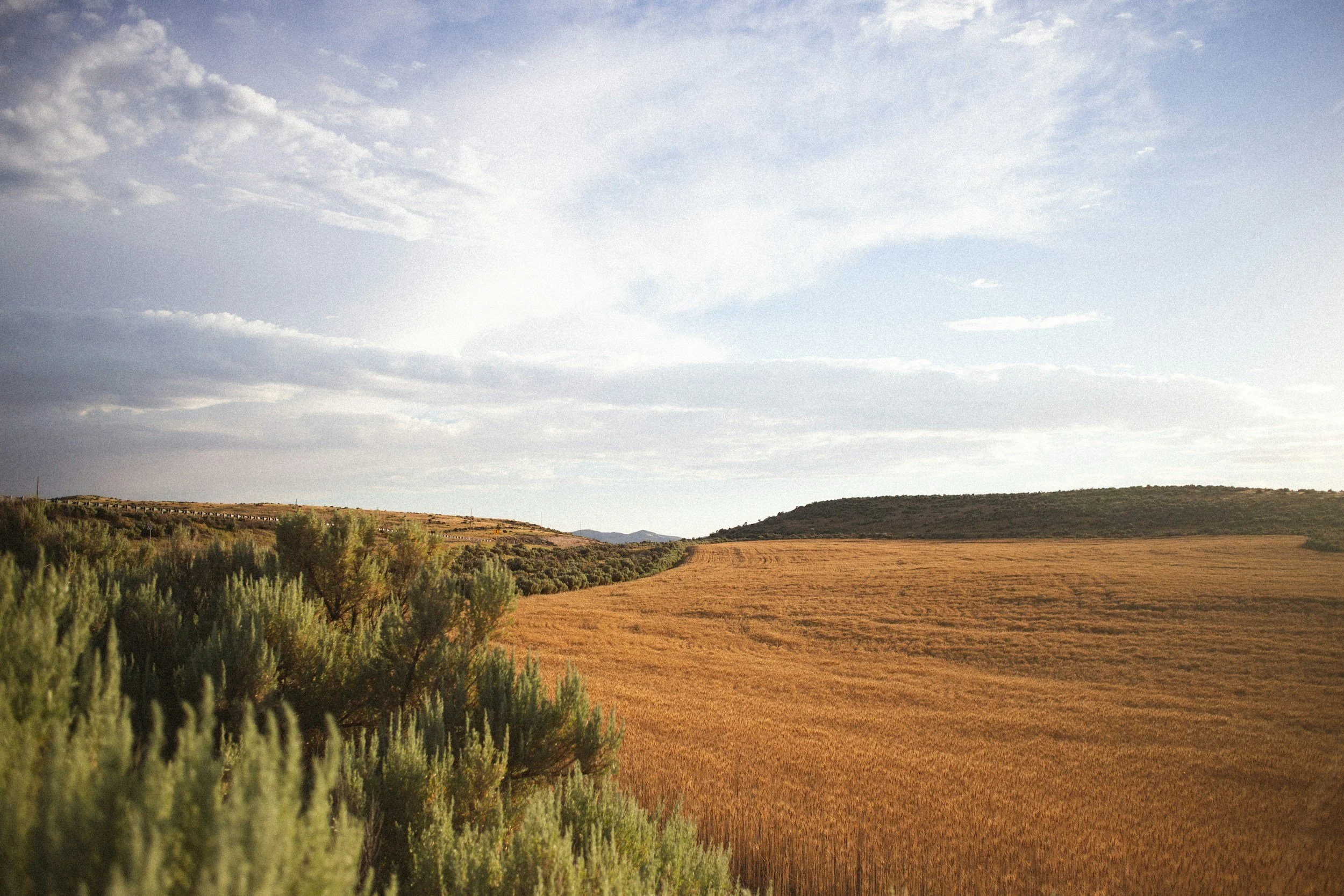
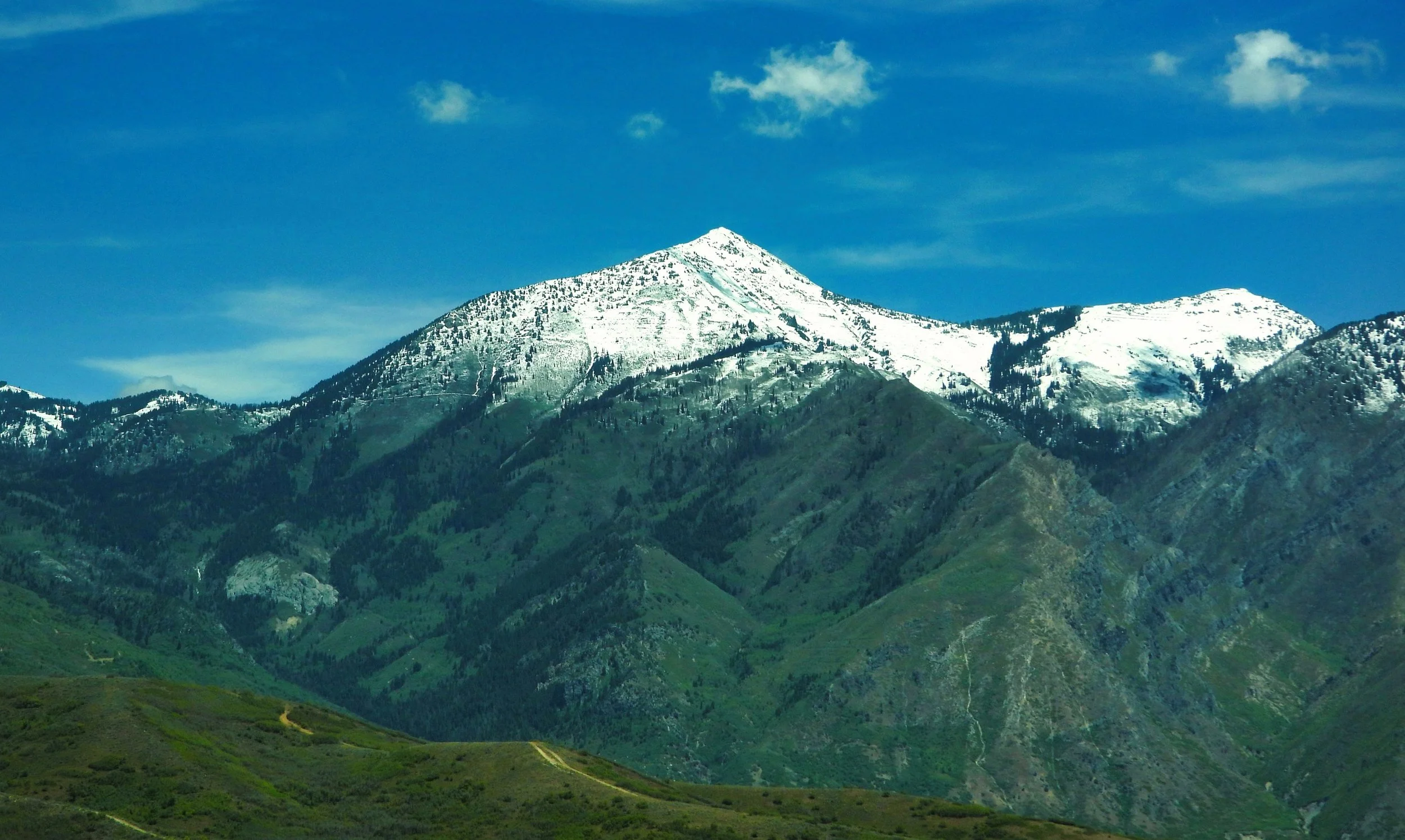
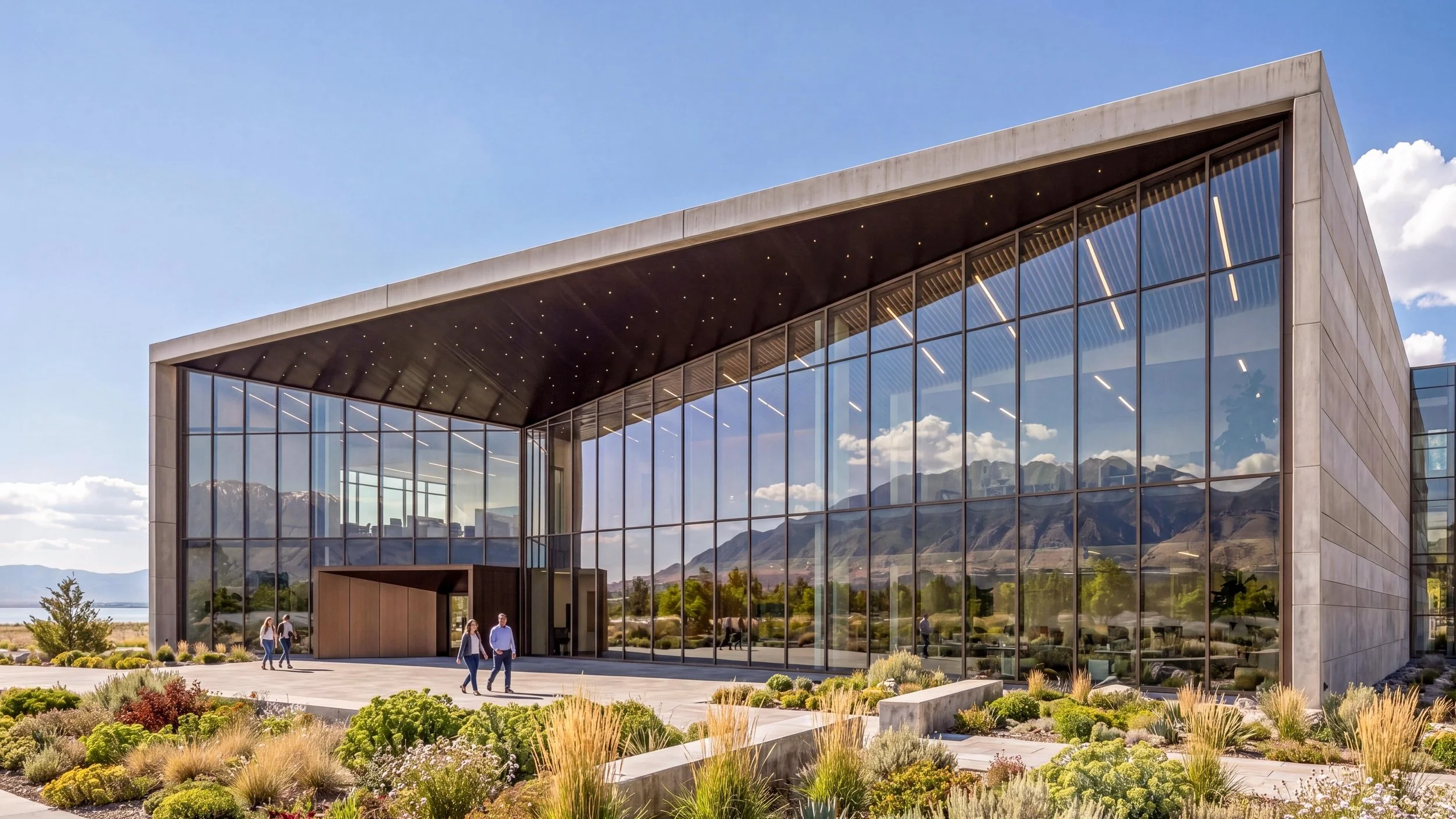
Let’s start with a Simple overview
The Stratos Project Area is an energy and technology infrastructure initiative in western Box Elder County, designed to strengthen national security and Utah's long-term economic competitiveness. Approved by the MIDA Board of Directors on April 24, 2026 and by the Box Elder County Commission on May 4, 2026, the project supports the development of a large-scale data and energy campus to power artificial intelligence, cloud computing, advanced manufacturing, and mission-critical defense operations.
Key facts about the project:
The actual data center footprint will be a fraction of the total area – with the current plan for phase 1 to take only approximately 5% of all project area acres – with any undeveloped property preserved as open space supporting wildlife corridors, continued grazing, and significant separation from the Great Salt Lake. For context, Salt Lake City sits closer to the Great Salt Lake than the proposed data center will.
The project is being developed by a partnership that includes O'Leary Digital Utah Development Co., LLC, in coordination with state and local stakeholders.
The development team has committed to fund ALL public infrastructure within the project area, plus $16.2 million in up-front funding to Box Elder County to offset initial impacts on county budget for essential services such as law enforcement and fire personal and equipment during the initial construction phase.
Power for the campus will be produced entirely on-site through newly constructed, stand-alone generation facility. The campus will not draw from the existing electric grid and will not raise power costs for Utah residents.
Using the latest technology, the campus will use a closed-loop chilling system combined with dry (air-based) cooling, with no continuous water draw. Water for the project will be sourced from existing private water rights — not from the Great Salt Lake — and net water consumption is expected to be lower than current agricultural use of those same rights. Any excess water will flow toward the Great Salt Lake.
The project is anticipated to support approximately 2,000 permanent jobs at full build-out, along with thousands of construction jobs over a multi-year phased build period.
Projected revenues to Box Elder County are estimated to be $30 million annually in the initial phases and $108 million annually at full build-out, with the County retaining full discretion over remaining funds after municipal services are covered. For context, the Box Elder County approved 2025 total budget was $76.3 million.
Projected energy tax revenues from the Stratos Project Area could create a MAJOR opportunity to reduce the property tax burden for Box Elder County residents. For comparison, all property tax jurisdictions across the county collected approximately $75.6 million in 2025, meaning Stratos revenues could initially offset a significant share of countywide property taxes and, at full build-out, could generate enough annual revenue to potentially eliminate them entirely.
Development will proceed in phases over multiple years and decades, with continued planning, infrastructure coordination, state regulatory permitting, and community engagement. A Design Review Committee — represented largely by Box Elder County expert staff and a local landowner — will oversee site-level design. Its meetings will be public.
The project remains subject to all required state and federal regulatory review, including permits administered by the Utah Department of Environmental Quality (Divisions of Air Quality, Drinking Water, and Water Quality), the Division of Water Rights, and the Division of Wildlife Resources. Each permitting step includes public comment opportunities.
The Stratos Project is designed to deliver direct, measurable benefits to Box Elder County — and to do so without placing a financial burden on county taxpayers.
For Box Elder County Residents
Revenue and tax impact
Revenue from the project will be applied first to covering municipal services. The County will retain full discretion over any remaining funds.
In the initial phases, the project is projected to generate approximately $30 million in new annual revenue for the County.
At full build-out, projected annual revenue is expected to reach approximately $108 million from the energy and data center complex. For context, the Box Elder County approved 2025 total budget was $76.3 million.
Stratos energy tax revenues could significantly reduce property taxes for Box Elder County residents. In 2025, all property tax jurisdictions countywide collected about $75.6 million, meaning Stratos revenues could initially offset a major share of that burden and eventually generate enough to potentially eliminate it entirely.
All public infrastructure within the project area will be funded by the developer, not by Box Elder County taxpayers.
Jobs and economic opportunity
The project is expected to support thousands of construction jobs over a roughly ten-year build period.
At full build-out, the developer has committed to approximately 2,000 permanent jobs in skilled trade, logistics, IT, and administrative positions for county residents.
Why Hansel Valley?
Direct access to Ruby Pipeline - a major natural gas corridor

Proven geotechnical conditions for large-scale development

Proximity to workforce in Brigham City and Tremonton

Existing fiber infrastructure for data connectivity

The same state air quality standards apply here as elsewhere in utah. the difference is that locating in hansel valley keeps new emissions out of an already burdened airshed.

no water from the Great Salt lake. its closed loop cooling design uses only existing private water rights, with net consumption water use already lower than already established on the same land.
Frequently Asked Questions
We’ve received a lot of important questions.
-
As technology becomes more central to the modern economy, the demand for dependable and resilient energy continues to grow. Large-scale data centers operate around the clock to support artificial intelligence, cloud computing, and the digital tools that families, businesses, and communities rely on every day.
The Stratos Project also addresses a specific national defense need. At the request of the Undersecretary of the Air Force, the Military Installation Development Authority (MIDA) was asked to identify locations capable of providing independent energy and computing power — recognizing that energy resilience, compute capacity, and data storage are now critical to defense operations. The project also supports federal Executive Orders addressing national energy resilience and the development of critical infrastructure.
Beyond defense and technology, the project is expected to bring significant private investment to Utah, generate long-term local and state revenue, support thousands of construction jobs and permanent careers, and fund needed public infrastructure.
-
The total project area covers approximately 40,000 acres, but the actual data center footprint will occupy only a fraction of that (~2,000 acres). Different power generation technologies require different amounts of land — solar requires a larger physical footprint than natural gas, for example — so the precise developed acreage will depend on the final energy mix.
The majority of the project area will remain undeveloped open space, supporting wildlife corridors, continued grazing, and significant separation from the Great Salt Lake. For comparison, Salt Lake City sits closer to the Great Salt Lake than the proposed data center will.
-
Water is among Utah's most carefully managed resources, and the Stratos Project has been designed with that reality in mind. The cooling architecture and water-rights structure described below are intended to deliver lower net water consumption than the agricultural use already occurring on this land — and it will never draw from the Great Salt Lake.
Cooling design. The campus will use a closed-loop chilling system combined with dry (air-based) cooling. Cooling fluid circulates within sealed equipment and is reused continuously, so there is no continuous water draw during operation. Water is required only for the initial system fill and for minor maintenance. Because of this design, ongoing day-to-day water demand at the campus is expected to be similar to that of a large office complex — primarily restrooms, sinks, and employee facilities.
Water source. All water for the project will come from existing private water rights attached to land the development team is acquiring. None of the water will come from the Great Salt Lake. Because the project is using rights that are already in place — rather than seeking new water — net water draw on the watershed is expected to decline relative to current use.
Water rights acquired. The development team is acquiring approximately 13,564 acre-feet of water rights. These are the rights currently attached to the properties being purchased.
Projected use. At full build-out, the campus is projected to use approximately 2,180 acre-feet of water annually. With the project's planned closed-loop and dry-cooling design, that figure is projected to fall further, to between 500 and 1,100 acre-feet annually. Because the project is acquiring more water rights than it intends to use, the unused portion stays in the basin — which is the basis for the project's projected net benefit to the Great Salt Lake watershed.
Public process. Every water-rights change application submitted to the Utah Division of Water Rights is subject to a 20-day public comment period. The project's initial application was submitted on March 25 and withdrawn on May 6; the development team has indicated it will refile with additional information.
-
The Stratos Project supports reliable, domestic energy production and strengthens the alignment of local, state, and federal efforts to protect critical infrastructure, advance energy resilience, and support national defense. At the request of the Undersecretary of the Air Force, MIDA was asked to identify locations capable of providing independent energy and computing power — recognizing that energy resilience, compute capacity, and data storage are now critical to defense operations. The project also supports federal Executive Orders on national energy resilience and the development of critical infrastructure.
The campus's principal users will be large-scale data centers serving both defense-related missions and broader commercial demand. Future-phased development may also include advanced manufacturing facilities. Both the energy generation and the campus tenants are expected to contribute meaningful economic growth to Box Elder County and the State of Utah.
"From a military standpoint, projects like this matter because national security has to be built into our infrastructure from the start. Investments that strengthen energy resilience and support critical systems help ensure we're prepared for the challenges ahead and able to operate without interruption when it matters most. Having reliable energy and strong data infrastructure is becoming critical to how we operate, and efforts like this help strengthen readiness in a very real way. We're grateful for the collaboration and the shared focus on moving military readiness forward."
— Col. Andy Owens, Director, Utah National Guard Joint Staff
-
Most of the project area is currently used for seasonal livestock grazing rather than crop production, and much of the land is difficult to farm and supports only limited agricultural use today. The development team has indicated that grazing can continue in many areas as infrastructure is phased in, and large portions of the site are expected to remain open even at full build-out. Land will also be leased back to local ranchers for grazing during and after construction.
-
The Stratos campus will produce all of its electricity on-site through newly constructed, stand-alone generation facilities. The campus will not draw from the existing electric grid, and the project will not raise power bills for Utah residents.
By generating its own power, the campus avoids placing additional demand on the grid that serves homes, farms, schools, and local businesses across the state. The on-site generation is also designed to deliver the dependable, around-the-clock power needed to support advanced computing and AI infrastructure — a baseline requirement for any large-scale data center.
-
At full build-out, the developer estimates 2,000 permanent jobs in skilled trades, logistics, IT, and administrative positions for Box Elder County residents. The project is also expected to provide thousands of construction jobs over a roughly ten-year build period.
-
The MIDA designation does not change or reduce the project's obligation to comply with state and federal regulatory requirements. Before construction can begin, the development team must obtain all standard approvals, and the project will be subject to oversight from multiple Utah state agencies, including:
The Division of Air Quality, which will evaluate projected air pollutant emissions and require specific control techniques.
The Division of Drinking Water, which will review drinking water systems and ensure they are physically separate from water used for cooling, fire protection, or power generation.
The Division of Water Quality, which requires permits for surface water and groundwater discharges to waters of the state, including the Great Salt Lake.
The Division of Water Rights, which evaluates water availability and reviews any water rights change application. Each application includes a 20-day public comment period.
The Division of Wildlife Resources, which can review potential impacts to wildlife and recommend mitigation measures once a formal plan is submitted.
Public comment opportunities apply at each step. The Division of Air Quality issues a 30-day public comment period and a public hearing if requested on draft permits, and the Division of Water Quality requires a rigorous public notice process for the multiple permit possibilities under its jurisdiction.
-
The 9 GW figure is not the project. As addressed above, 9 GW is a hypothetical capacity number, not a development plan. Initial plans anticipate approximately 1.5 GW of power consumption, generating a total thermal load of roughly 2.7 GW. The "23 atom bombs per day" calculation that has appeared in recent coverage is derived from the 9 GW hypothetical applied as if it were an approved plan — it is not a projection of what will actually be built. Phase 1's thermal load is below that of the Intermountain Power Project near Delta, which has operated in Utah for decades without producing the regional climate disruption being projected for Stratos.
-
The Stratos campus, like any large electricity-consuming facility, will release heat to its environment. Concerns about that thermal load are reasonable, and the development team takes them seriously.
The project today is not 9 GW. The 9 GW figure represents an anticipated full build-out target. The first phase of construction will be a fraction of that capacity, and reaching the projected full scale will take many years of phased construction, regulatory review, and infrastructure development. The "23 atom bombs per day" energy calculation that has appeared in recent coverage applies the full build-out projection as if it were today's project, when in reality the early-phase thermal load will be roughly an order of magnitude smaller.
The energy mix will not be all gas. The full build-out is not anticipated to rely solely on natural-gas generation. Future phases are expected to include additional sources beyond gas-fired generation — reshaping both the local heat profile and the broader environmental footprint compared to a hypothetical all-gas baseline. The exact composition of later phases will depend on regulatory approvals, technology availability, and infrastructure development at the time of each phase.
Technology will continue to evolve. Data center cooling, generation efficiency, and waste-heat management have advanced meaningfully over the past decade and are expected to continue evolving over the project's build-out period. The campus's design will be updated through its phased construction to incorporate the best available technology, not frozen in 2026.
Comparison context. Large heat releases from human activity in Utah are not new. The Intermountain Power Project near Delta has operated as a 4–5 GW thermal-load industrial source for decades, on a footprint of roughly 4,800 acres. Cities such as Brigham City, Logan, and Salt Lake City each release continuous anthropogenic heat to their environments — at scales that, in the case of Salt Lake City, are within the same order of magnitude as the figures being projected for the Stratos full build-out. None of these locations has produced the kind of regional climate disruption that has been suggested by recent commentary on this project.
Independent expertise and regulatory oversight. The development team is engaging environmental and atmospheric science experts to inform the project's design and to develop mitigation strategies — including those addressing heat rejection. The campus will be subject to all required state and federal regulatory review, including air quality permitting through the Utah Division of Air Quality, which evaluates projected emissions and mandates specific control techniques before construction can begin.
-
Multiple Utah state agencies will provide oversight and review of the project before construction can begin, including:
The Division of Air Quality, which will evaluate projected air pollutant emissions and mandate specific control techniques.
The Division of Drinking Water, which will review drinking water systems and ensure they are physically separate from water used for cooling, fire protection, or power generation. The review covers source approval, facility design, operator certification, and reporting requirements intended to ensure public health and safety.
The Division of Water Quality, which requires permits for all surface water and groundwater discharges to waters of the state, including the Great Salt Lake.
The Division of Water Rights, which evaluates water availability. A water right change application was submitted on March 25 and withdrawn on May 6; the applicant has indicated an intent to refile with additional information. Every water rights application is subject to a 20-day public comment period.
The Division of Wildlife Resources, which can review potential impacts to wildlife and recommend mitigation measures once a formal plan is submitted. For projects on public land, that review is typically conducted through the Resource Development Coordinating Committee — a state-level body that serves as a clearinghouse for proposals affecting Utah's public lands and natural resources.
-
Development will proceed in phases over multiple years, with continued planning, infrastructure coordination, state regulatory permitting, and community engagement throughout the process. MIDA will also establish a Design Review Committee, as it has for other MIDA project areas. The DRC will be made up largely of Box Elder County expert staff and a local landowner, and its meetings will be open to the public.
Public comment opportunities are also built into the state regulatory process — including a 20-day public comment period for water rights applications, a 30-day comment period and a public hearing (if requested) on Division of Air Quality draft permits, and a public notice process at the Division of Water Quality.
-
The Stratos campus, like any large electricity-consuming facility, will release heat to its environment. Concerns about that thermal load are reasonable, and the development team takes them seriously.
-
The full build-out is not anticipated to rely solely on natural-gas generation. Future phases are expected to incorporate additional generation sources — reshaping both the local heat profile and the broader environmental footprint compared to a hypothetical all-gas baseline. The exact composition of later phases will depend on regulatory approvals, technology availability, and infrastructure development at the time of each phase.
-
Data center cooling, generation efficiency, and waste-heat management have advanced meaningfully over the past decade and are expected to continue evolving over the project's build-out period. The campus design will be updated through phased construction to incorporate best available technology, not frozen at 2026 specifications.
-
Large heat releases from human activity in Utah are not new. The Intermountain Power Project near Delta has operated as a 3–5 GW thermal-load industrial source for decades on a footprint of roughly 4,800 acres. Salt Lake County — home to 1.25 million residents, businesses, and industry — releases an estimated 3.5–5 GW of continuous anthropogenic heat across its 800 square miles. Stratos' initial plans at approximately 2.7 GW falls below both of these existing benchmarks. The key difference the development team acknowledges — and is actively designing around — is that Stratos concentrates its load in a single undeveloped valley rather than dispersing it across existing urban and industrial infrastructure. That distinction drives the team's investment in heat rejection design, phased buildout, and independent environmental review.
-
The development team is engaging environmental and atmospheric science experts to inform the project's design and to develop mitigation strategies including heat rejection. The campus will be subject to all required state and federal regulatory review, including air quality permitting through the Utah Division of Air Quality, which evaluates projected emissions and mandates specific control techniques before construction can begin.